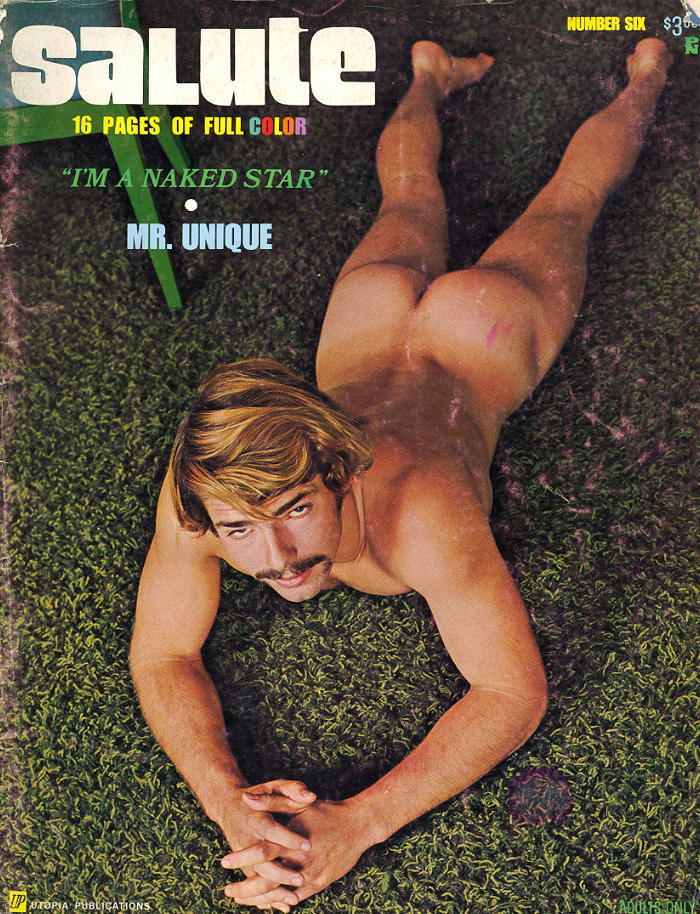
“I’m a Naked Star” featuring Mr Unique, late 1960s, maybe early 70s Utopia Publications.
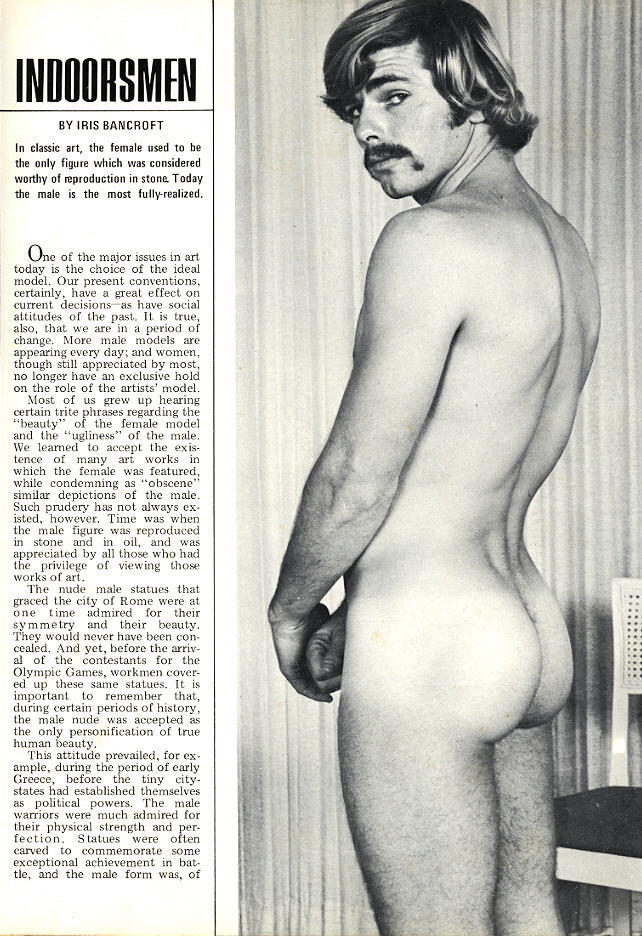
INDOORSMEN
BY IRIS BANCROFT
In classic art, the female used to he the only figure which was considered worthy of reproduction in stone. Today the male is the most fully-realized.
One of the major issues in art today is the choice of the ideal model. Our present conventions, certainly, have a great effect on current decisions as have social attitudes of the past. It is true, also, that we are in a period of change. More male models are appearing every day; and women, though still appreciated by most, no longer have an exclusive hold on the role of the artists’ model. Most of us grew up hearing certain trite phrases regarding the “beauty” of the female model and the “ugliness” of the male. We learned to accept the exis-tence of many art works in which the female was featured, while condemning as “obscene” similar depictions of the male. Such prudery has not always ex-isted, however. Time was when the male figure was reproduced in stone and in oil, and was appreciated by all those who had the privilege of viewing those works of art.
The nude male statues that graced the city of Rome were at one time admired for their symmetry and their beauty. They would never have been con-cealed. And yet, before the arriv-al of the contestants for the Olympic Games, workmen cover-ed up these same statues. It is important to remember that, during certain periods of history, the male nude was accepted as the only personification of true human beauty.
This attitude prevailed, for ex-ample, during the period of early Greece, before the tiny city-states had established themselves as political powers. The male warriors were much admired for their physical strength and per-fection. Statues were often carved to commemorate some exceptional achievement in bat tle, and the male form was…
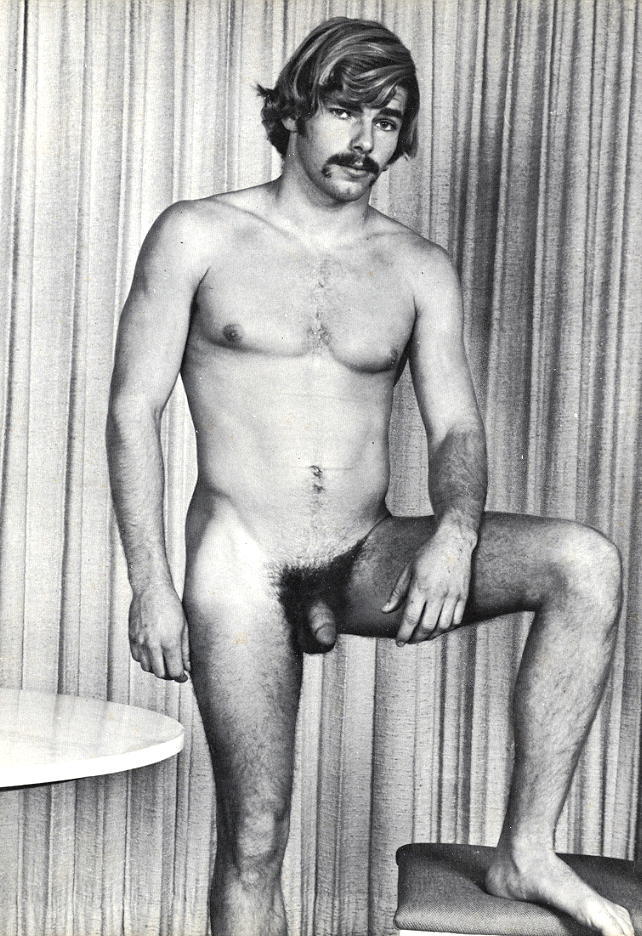
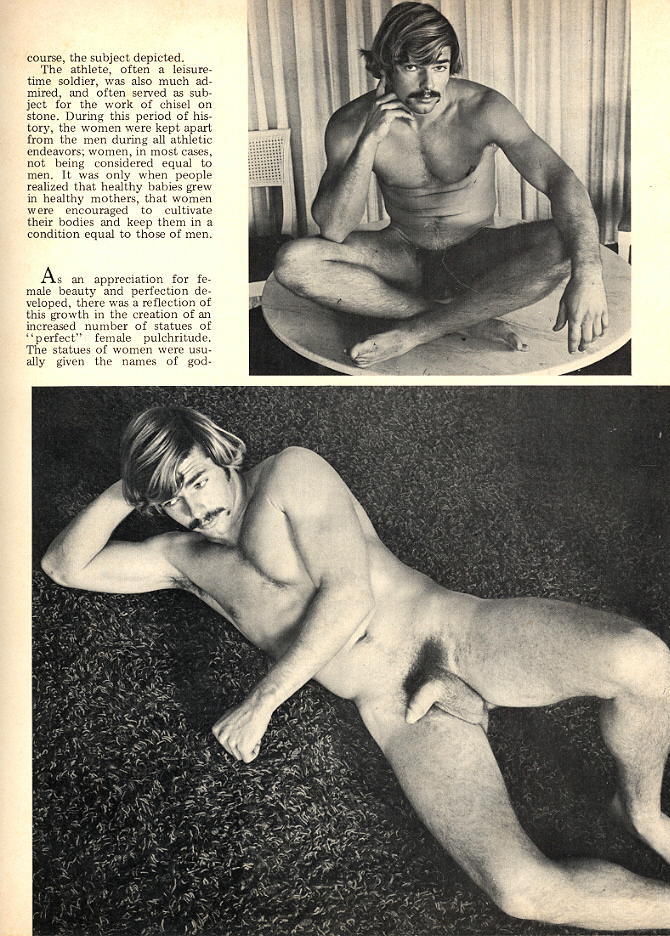
course, the subject depicted. The athlete, often a leisure-time soldier, was also much ad-mired, and often served as sub-ject for the work of chisel on stone. During this period of his-tory, the women were kept apart from the men during all athletic endeavors; women, in most cases, not being considered equal to men. It was only when people realized that healthy babies grew in healthy mothers, that women were encouraged to cultivate their bodies and keep them in a condition equal to those of men.
As an appreciation for fe-male beauty and perfection de-veloped, there was a reflection of this growth in the creation of an increased number of statues of “perfect” female pulchritude. The statues of women were usu-ally given the names of god.