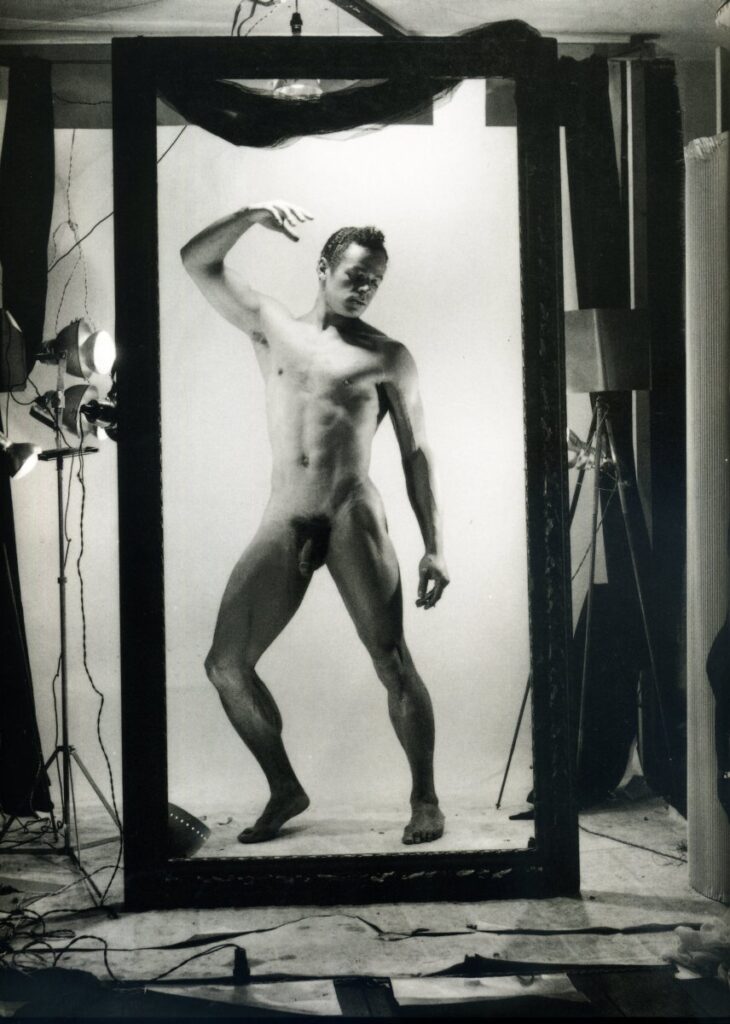
There’s a fervent debate in the vintage porn collecting community about whether John Barrington was actually a good photographer or not; with several sites taking the “no” side.
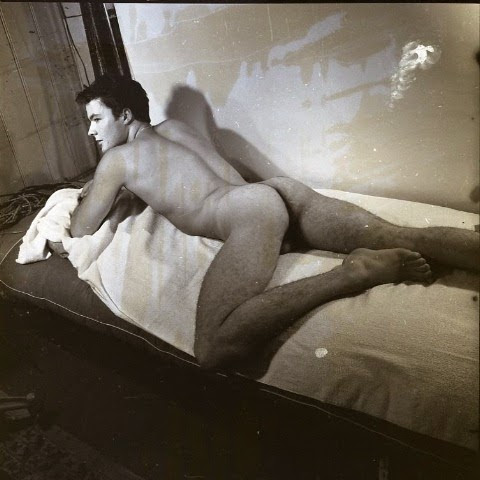
Many of Barrington’s surviving prints survive only in badly marred forms, as the British authorities kept destroying his work, usually without a court order, whenever he got in trouble.
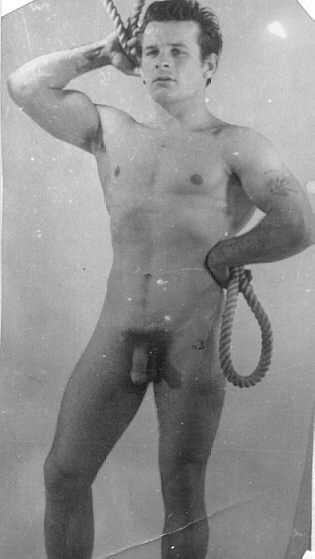
I personally suspect much of this marring doesn’t reflect Barrington’s lack of skill at developing film so much as his work being unusually likely to have had a rough ride through its history before scanning.
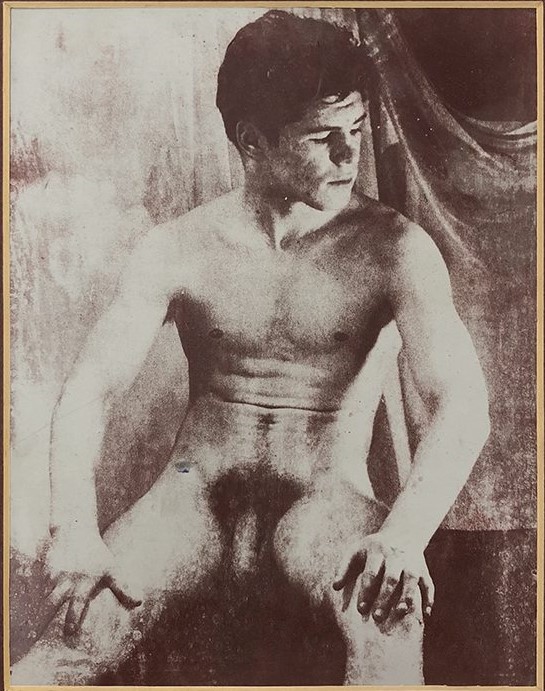
Barrington is known to have experimented with advanced techniques like developing this tintype he took of Peter Ramm in the early 60s, almost a century after it was the dominant technology.
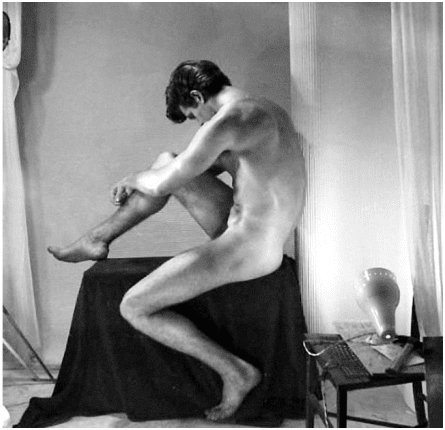
Barrington is known for leaving lights and equipment in his shot, and this often reads as a lazy photographer failing to crop an obviously-intended-to-be-cropped photo to the less charitably inclined.
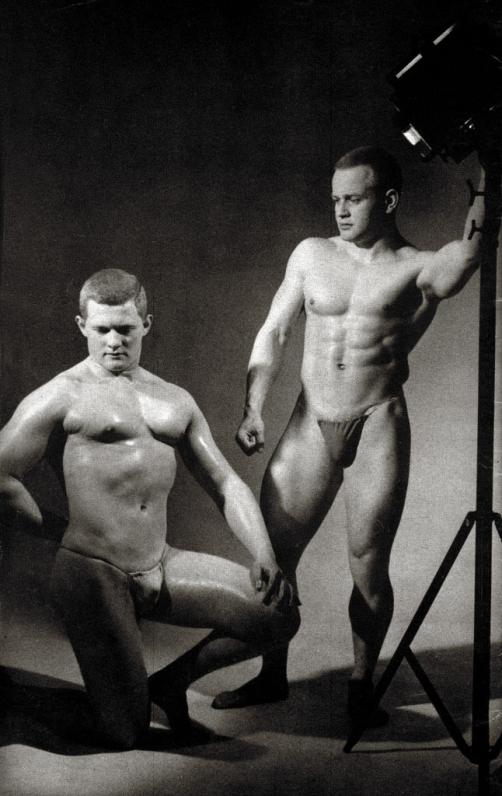
But if you look carefully at this photo of Dave Hawtin and Vic Haywood, don’t you notice that the model is actively adjusting the light and the whole photo is composed around the light?
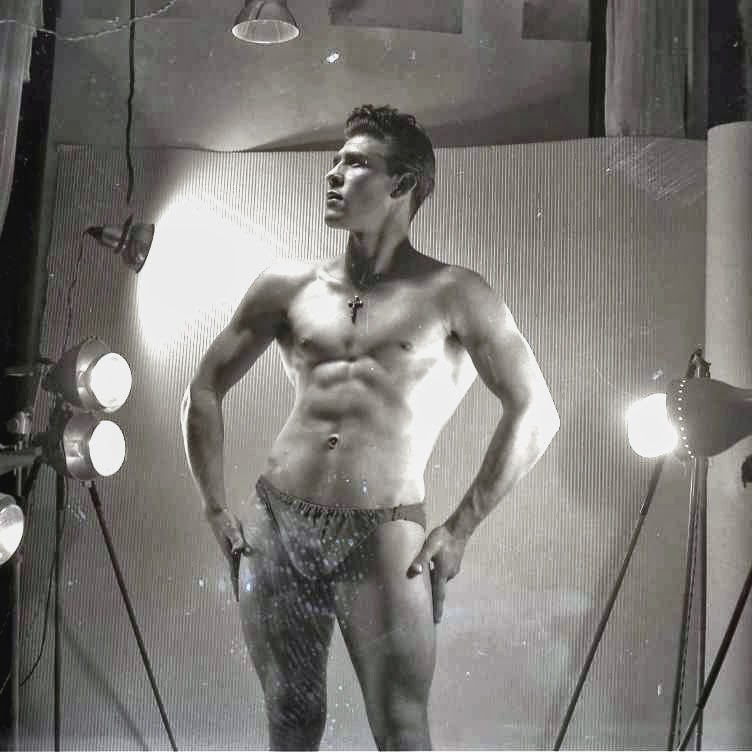
Likewise, it’s hard for me to read this photo of Danny Purches as anything but a commentary on the process of photography itself: the lights are arranged visually for maximum impact as compositional elements of the photograph resulting in the photo itself being side-lit in a dramatic but photographically compromised way.
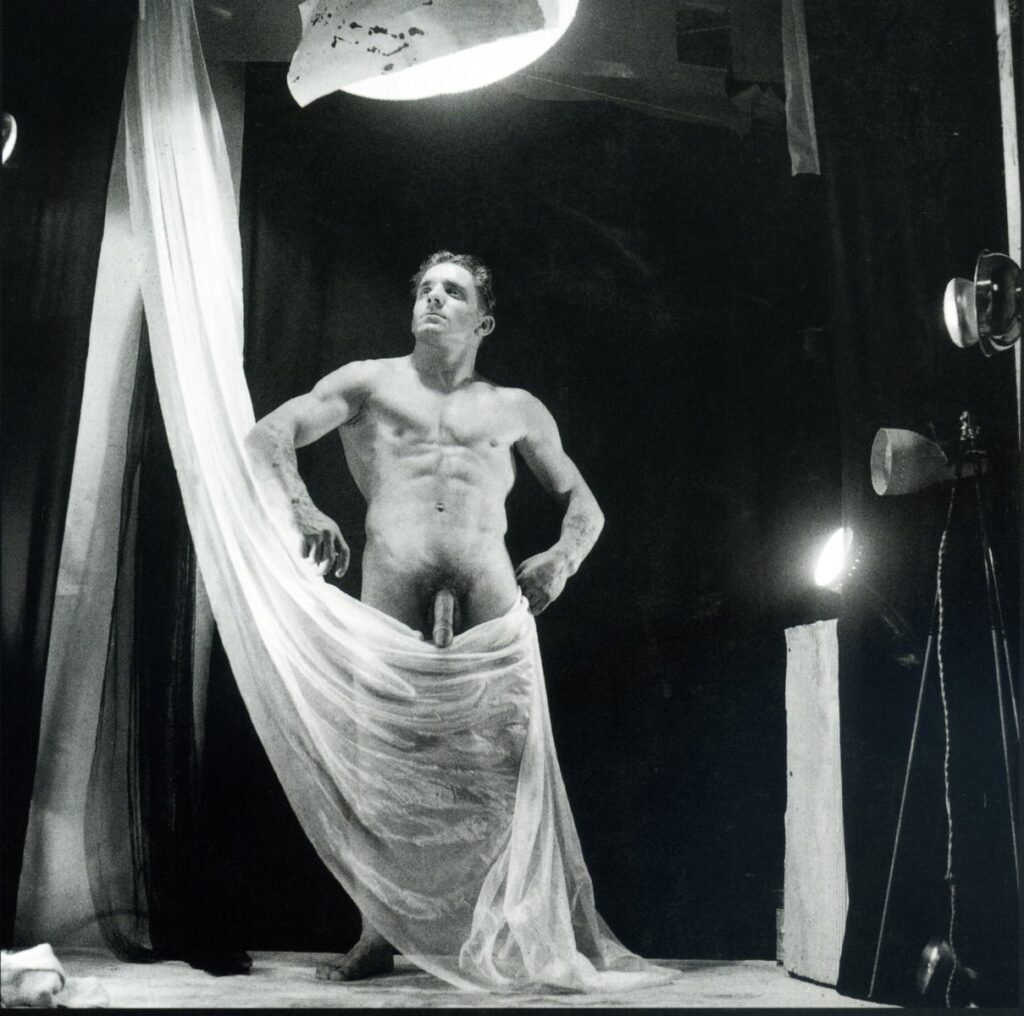
I think Barrington wants us to step back here, and see the process of photography instead of the photograph itself. This photo is well lit and composed in its cropped version, but we’re privileged to see the uncropped version precisely because it shows things perfection can’t.
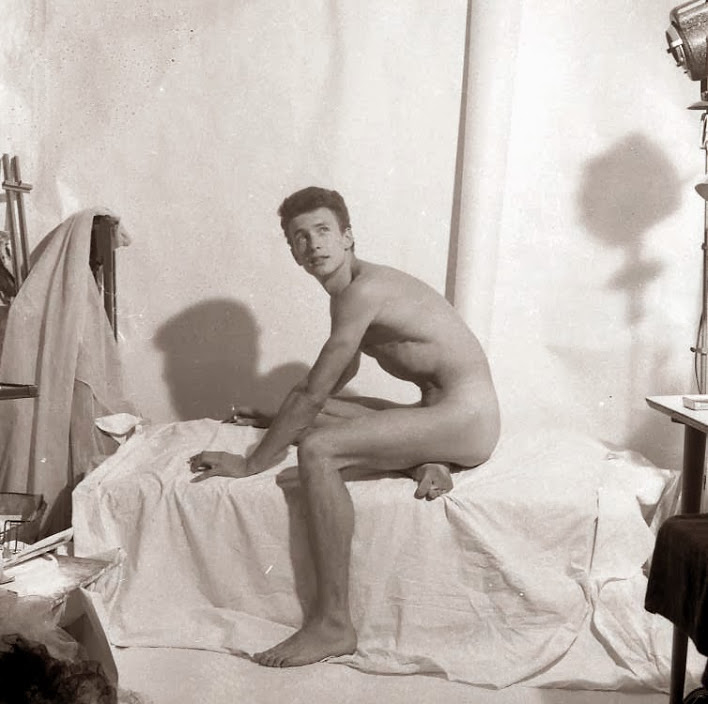
It’s true that this could be an accidental mis-crop, but if so why does the model’s sight-line go directly into the light fixture posed at the edge of the screen?
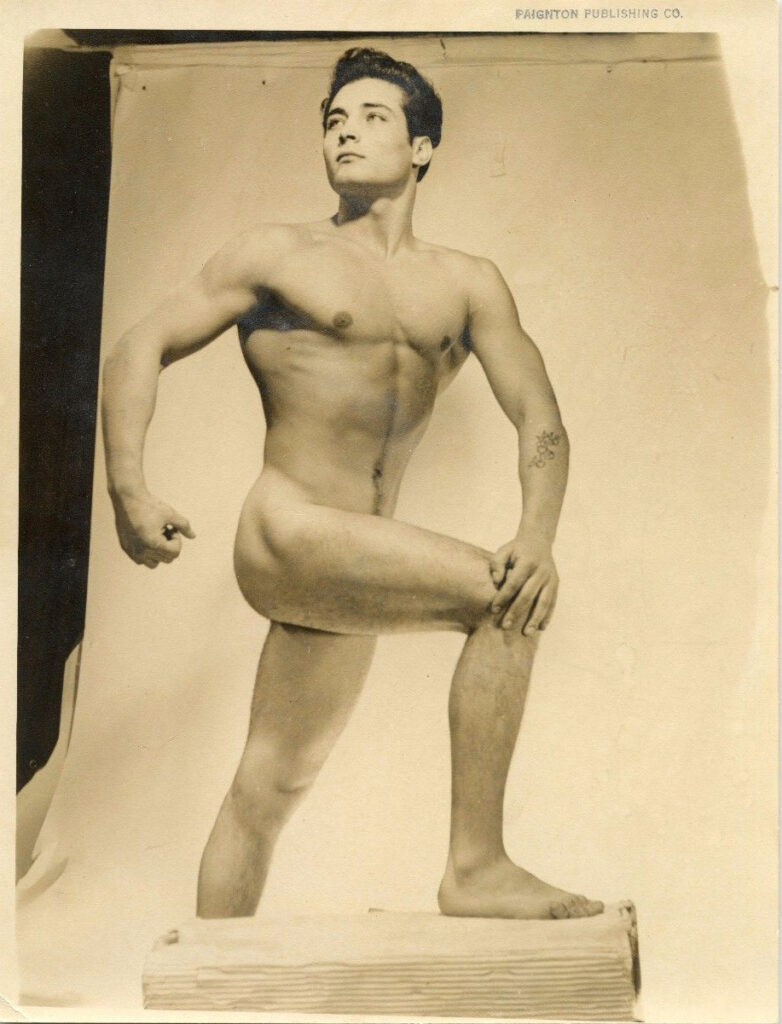
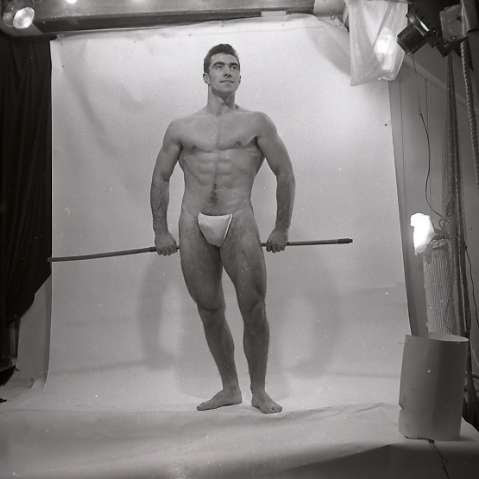
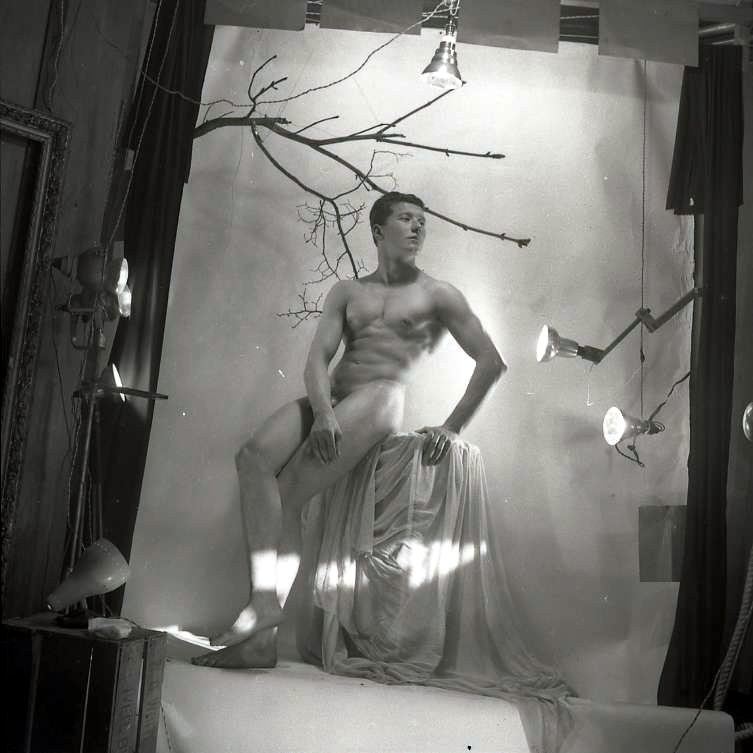
Sure you can see the edge of the backdrop, paired with his watermark in the first published piece above. But just like the included lights carefully placed as photographic props in the next two images; the behind the scenes effect is just as deliberate a concoction as the fact of choosing a studio in the first place.
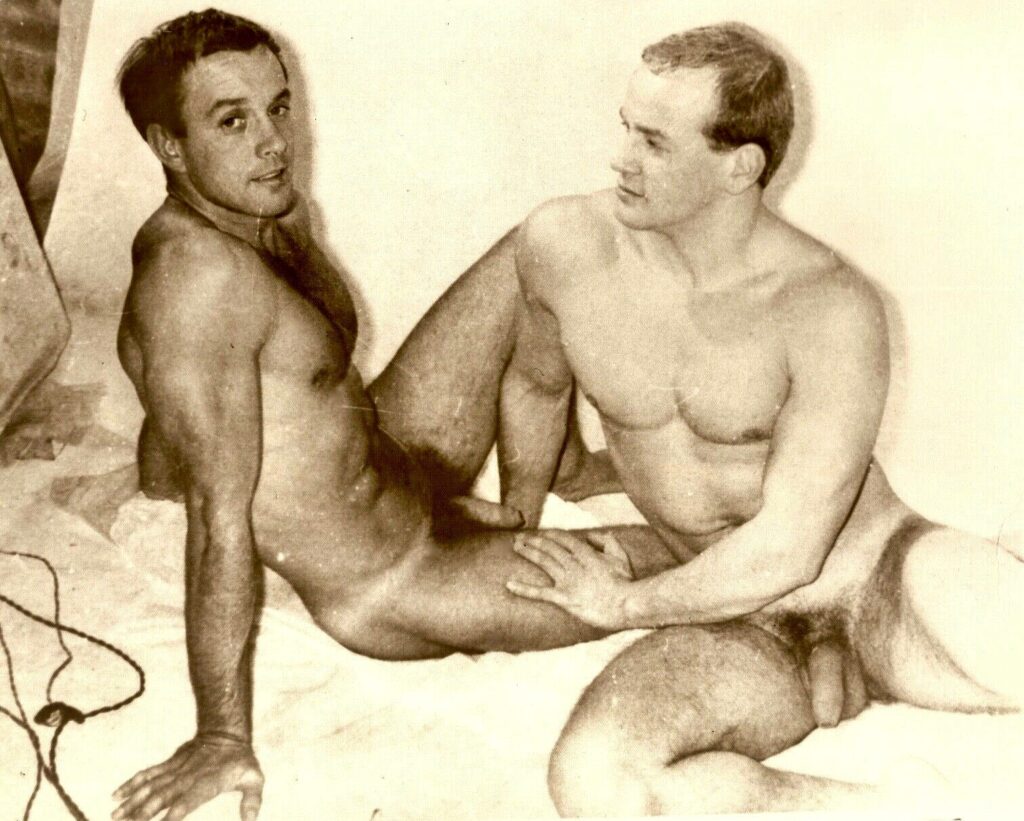
My own theory is that it’s a commentary on the intimacy of the photographic process itself, as he could very easily have burned the corner of the negative to fake the backdrop continuing, or simply changed his position to have both models clearly framed.
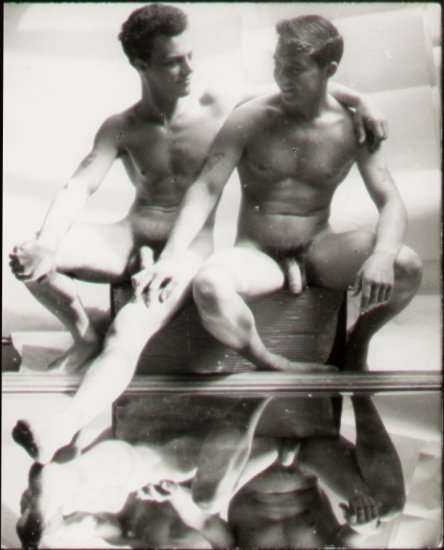
So if you’re going to collect John Barrington, it’s best to reflect on him in all his complexity.
